
Advisory Board
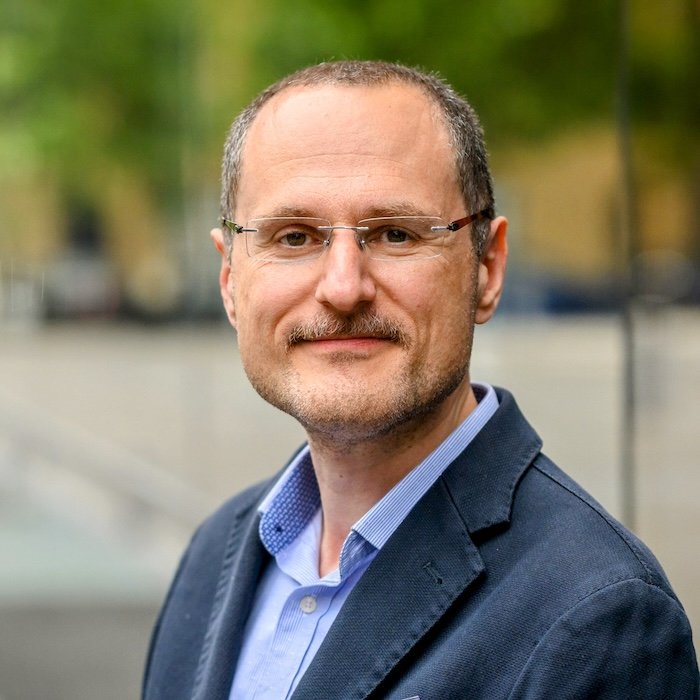
Professor Venet Osmani
Professor of Clinical AI and Machine Learning, Director of Osmani Lab at Queen Mary University of London
Professor Venet Osmani has significant experience in developing machine learning methods to address fundamental challenges in medicine. He directs the Osmani Lab focusing on interdisciplinary research, including analysis of large-scale, longitudinal biomarkers, imaging, and multi-omics to optimise treatment strategies, improve patient care and mitigate health inequities. He is a Visiting Professor at the University of Sheffield where he was an Executive Board member of the Healthy Lifespan Flagship Institute (HELSI), Research Board member of the Insigneo Institute and co-directed a Doctoral Training Centre on Public Health, funded by Wellcome. His research and that of his lab is funded by the European Commission, UK’s Medical Research Council (MRC), Engineering and Physical Sciences Research Council (EPSRC), National Institute for Health and Care Research (NIHR), British Heart Foundation (BHF), and Italian Ministry of Health.
Further information is available at this link.
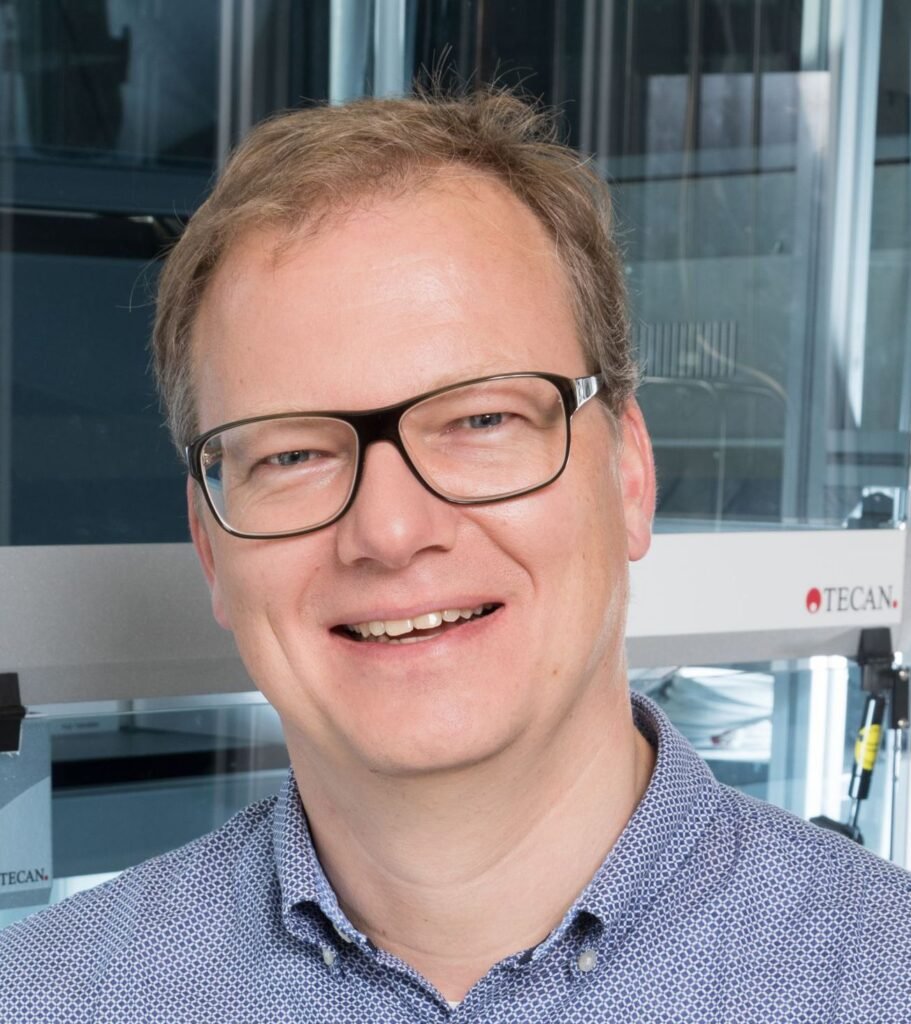
Professor Marco Oldiges
Head of the Bioprocesses and Bioanalytics Group at the Institute of Bio- and Geosciences – IBG-1: Biotechnology at Forschungszentrum Jülich
Associate Professor for Bioprocess Analytics at the Faculty of Mathematics, Computer Science and Natural Sciences at RWTH Aachen University
Univ.-Prof. Dr. Marco Oldiges is an internationally recognized expert in microbial biotechnology and bioprocess engineering. He studied chemistry with a focus on technical chemistry at the University of Bonn, Germany, where he obtained his diploma degree and subsequently completed his PhD (Dr. rer. nat.) at the Faculty of Chemistry in 2004.
Since 2004, he has been Head of the Bioprocesses and Bioanalytics Group at the Institute of Bio- and Geosciences – IBG-1: Biotechnology at Forschungszentrum Jülich. In parallel, he has held the position of Associate Professor for Bioprocess Analytics at the Faculty of Mathematics, Computer Science and Natural Sciences at RWTH Aachen University since 2011. In this dual role, he closely integrates academic teaching with application-oriented research at a national research center.
His research group holds a leading position in the development of microbial production organisms and bioprocesses for proteins, peptides, and metabolites. Core activities include the development of scalable cultivation workflows at the microscale and their integration into laboratory automation workflows. These approaches enable accelerated phenotyping of producer strain libraries and bioprocess optimization.
The group focuses on industrially relevant platform organisms such as Escherichia coli, Corynebacterium glutamicum, Pichia pastoris, and Trichoderma reesei. Microbial production processes developed within the group can be consistently scaled from laboratory scale up to 50-L pilot-scale bioreactors. Advanced bioanalytics play a central role, employing biochemical and optical assays as well as state-of-the-art GC-MS and LC-MS technologies for metabolomics and proteomis.
Beyond his scientific work, Marco Oldiges is actively involved in scientific advisory activities. Since 2021, he has been a member of the Scientific Advisory Board of the RWTH Aachen University profile area Molecular Science and Engineering (MSE). In addition, he has held numerous positions within DECHEMA, including memberships in scientific advisory boards for bioprocess technology, systems biology, and synthetic biology, as well as leadership roles in early-career researcher networks.
In recognition of his commitment to academic teaching, he received the DECHEMA Prize for Up-and-Coming Teachers in Higher Education in 2007. Univ.-Prof. Dr. Marco Oldiges has authored more than 118 peer-reviewed publications and has an h-index of 32 (Web of Science, August 2025), underscoring his significant impact on the fields of bioprocess engineering.